
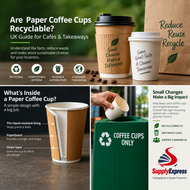
Are Paper Coffee Cups Recyclable? UK Guide for Cafés & Takeaways
Disposable paper coffee cups are used every day by cafés, coffee shops, restaurants, bakeries, takeaways and catering businesses across the UK. Although they look like ordinary paper packaging, recycling a used coffee cup can be more complicated than simply placing it in a general paper recycling bin.
The reason is that many takeaway cups combine paperboard with a thin internal barrier that helps prevent hot or cold drinks from soaking through the cup. The cup, its lid, leftover liquid and any contamination can all affect how the packaging should be collected and processed.
In this guide, we explain whether paper coffee cups can be recycled in the UK, why some cups require specialist collection, what happens to lids, and what cafés and other food businesses should consider when managing used takeaway cups.
If you are choosing cups for your business rather than looking for recycling information, read our paper cup size and type guide for help comparing 4oz, 8oz, 12oz and 16oz cups, wall types and compatible lids.
Are Paper Coffee Cups Recyclable?
Many paper coffee cups can potentially be recycled, but that does not mean every used cup can simply be placed in an ordinary paper and cardboard recycling collection.
Takeaway cups are usually designed to hold liquids safely, so the paperboard normally includes a barrier layer. Depending on the cup construction and the recycling system available, specialist processing may be required to separate or recover the different materials.
For this reason, cafés and other businesses should follow the instructions provided by their waste contractor rather than assuming that every paper cup belongs in the general paper recycling stream.
Why Can Coffee Cups Be Difficult to Recycle?
Ordinary cardboard boxes and sheets of paper are relatively straightforward fibre products. Disposable drinks cups have a more demanding job: they need to hold liquid without becoming soft or leaking.
To achieve this, many cups use a thin barrier on the inside of the paperboard. Different products may use different barrier technologies, so recycling instructions can vary between cup ranges.
Used cups can also contain:
- leftover coffee, tea or other drinks
- milk and drink residue
- plastic or fibre lids
- stirrers and straws
- sugar sachets and other waste
Mixing these items together can create contamination and make material recovery more difficult. Keeping the waste stream clean and following your collector's instructions can therefore be just as important as the material from which the cup is made.
Can Paper Coffee Cups Go in Normal Paper Recycling?
Not automatically. Businesses should check with their waste collector to determine whether used drinks cups are accepted with paper and card or whether a separate coffee cup collection is required.
This is particularly important because a cup that looks like paper may contain a lining or other materials that require different processing.
Waste collection arrangements also differ between businesses and locations, so the correct disposal route should always be confirmed with the organisation collecting your commercial waste.
What About Coffee Cup Lids?
Coffee cup lids should not automatically be treated in the same way as the cup itself. Depending on the product, lids may be manufactured from different materials and may need to be separated from the cup before collection.
Businesses should therefore check both the cup specification and lid specification when planning waste separation.
It is also good practice to encourage customers and staff to empty drinks before placing used packaging into the appropriate collection point.
Coffee Cup Recycling and UK Food Businesses
Waste separation has become increasingly important for businesses in England. Workplace recycling requirements introduced under Simpler Recycling require most workplaces to separate recyclable materials, food waste and residual waste before collection.
For cafés, restaurants and takeaway businesses, this makes it particularly important to understand what their waste contractor accepts and how drinks packaging should be separated.
Businesses should provide clear instructions for staff and, where customer recycling bins are provided, use simple signage showing which items belong in each waste stream.
Recyclable, Compostable and Biodegradable Are Not the Same
Packaging terminology can sometimes cause confusion. Recyclable, compostable and biodegradable do not mean the same thing.
A recyclable cup may require a suitable recycling collection and processing facility. A compostable cup may require an appropriate commercial composting system. Packaging labelled biodegradable should not automatically be assumed to belong in either recycling or composting.
Always check the manufacturer's product information and your local waste collection arrangements before deciding how packaging should be disposed of.
Are Compostable Coffee Cups Better?
Compostable cups can be useful where a suitable collection and processing system exists, but simply changing the material does not guarantee that the cup will be correctly recovered after use.
If compostable packaging is placed into the wrong waste stream, its intended end-of-life benefit may not be achieved. Before changing to compostable cups, businesses should therefore confirm that their waste contractor can collect and process them appropriately.
What About Reusable Coffee Cups?
Reusable cups can reduce demand for single-use cups when they are used repeatedly. Many cafés encourage customers to bring reusable cups, while still keeping disposable cups available for customers who need takeaway packaging.
For many businesses, the practical approach is not necessarily choosing only one system. A café may support reusable cups while continuing to provide suitable disposable cups for takeaway customers.
How Cafés Can Improve Coffee Cup Waste Management
A few practical steps can make cup disposal easier for both staff and customers:
- Speak to your waste contractor: confirm exactly which cups and lids they accept.
- Separate leftover liquids: provide somewhere for customers to empty unfinished drinks where appropriate.
- Separate lids when required: cups and lids may belong in different collection streams.
- Use clear signage: make it obvious which items belong in each bin.
- Train staff: ensure employees understand your recycling system.
- Check product specifications: do not assume all paper cups have the same composition.
- Avoid misleading environmental claims: describe packaging accurately and according to the manufacturer's specification.
Choosing Paper Cups for Your Business
Environmental considerations are only one part of choosing takeaway cups. A business also needs to consider drink size, insulation, lid fit, storage requirements and customer comfort.
Our complete paper cup buying guide explains the differences between single wall, double wall and ripple wall cups, together with common 4oz, 8oz, 12oz and 16oz sizes.
You can also browse our full range of paper cups and lids for hot and cold drinks for cafés, restaurants, coffee shops, bakeries, takeaways and catering businesses.
Frequently Asked Questions About Paper Cup Recycling
Can paper coffee cups be recycled in the UK?
Many paper coffee cups can be processed through suitable recycling systems, but they may not always be accepted with ordinary paper and cardboard. Check the cup specification and the requirements of your local or commercial waste collector.
Why can't coffee cups always go in normal paper recycling?
Many takeaway coffee cups contain a barrier layer that helps make the paperboard resistant to liquids. This construction can require different processing from ordinary paper and cardboard.
Should I remove the lid before recycling a coffee cup?
This depends on the materials and the collection system being used. Follow the instructions supplied by your waste contractor, as the cup and lid may need to be separated.
Should coffee cups be emptied before disposal?
Yes. Removing leftover drinks helps reduce contamination and makes waste separation cleaner and easier.
Are compostable cups the same as recyclable cups?
No. Compostable packaging and recyclable packaging use different end-of-life systems. Compostable cups may require specialist commercial composting facilities, while recyclable cups require an appropriate recycling collection and processor.
Are biodegradable cups recyclable?
Not necessarily. The term biodegradable describes how a material may break down under certain conditions and does not automatically mean that the product is suitable for conventional recycling.
Are reusable cups better than disposable cups?
Reusable cups can reduce the number of single-use cups required when they are used repeatedly. Businesses can support reusable cups while continuing to offer disposable takeaway cups where customers require them.
Where can I compare paper cup sizes and types?
Read our Paper Cup Guide to compare common cup sizes, single wall, double wall and ripple wall designs, hot and cold drink applications and lid compatibility.